Providing local news, info, and tips and tricks for homeowners and those interested in buying or selling real estate in North Idaho or Western Washington.
Also, listen to the Real Estate, Money and Marriage Podcast at KatherineAndDarin.com

BONUS MATERIAL: GET OUR GET-SELL-READY GUIDE. 18 SIMPLE INEXPENSIVE THINGS YOU CAN DO TO GET YOUR HOME READY FOR SALE
Are you tired of rummaging through a cramped, cluttered closet every day, desperately trying to find that one elusive pair of shoes or that favorite sweater?
It's time to take control of your space and transform your home with the power of a custom walk-in closet.
It could revolutionize the way you organize and access your belongings. increase the value of your home. In this fast-paced world where every square inch counts, a well-designed and thoughtfully organized walk-in closet is the ultimate luxury.

Imagine having a dedicated space for all your clothes, shoes, accessories, and more, with everything neatly displayed and within reach. No more wasted time searching for misplaced items or settling for subpar storage solutions. With a custom walk-in closet, you can maximize your space, enhance your daily routine, and add undeniable value to your home.
A cluttered home can be a source of stress and frustration. The lack of organization and storage space not only makes it difficult to find what you need but also creates a visually unappealing environment. This is where the importance of a well-designed walk-in closet comes into play. A custom walk-in closet provides an organized and efficient solution to store and display your belongings. It allows you to maximize your space and keep everything in its place, making your daily routine more efficient and enjoyable.
Not only does a custom walk-in closet provide ample storage, but it also enhances the overall aesthetic appeal of your home. With carefully designed shelving, hanging rods, drawers, and compartments, you can showcase your clothes, shoes, and accessories in a way that reflects your personal style. A clutter-free and visually appealing walk-in closet can effortlessly elevate the entire look and feel of your home.
Investing in a custom walk-in closet is not just about creating a beautiful and organized space; it's also a long-term investment that adds value to your home. Potential buyers are increasingly seeking homes with functional and stylish storage solutions. A custom walk-in closet can significantly increase the desirability and value of your property, making it a wise investment both for your current enjoyment and future resale potential.
If you’re asking does a custom walk-in closet increase the value of your home, you might be asking yourself:
Is it Worth Updating Your Kitchen to Sell the House?
and Does Replacing Carpet Increase Home Value?
When it comes to maximizing your space and home value, a custom walk-in closet offers numerous benefits. Let's delve deeper into why investing in a custom walk-in closet is a game-changer for your home:
1. Ample Storage Space

One of the primary advantages of a custom walk-in closet is the abundance of storage space it provides. Unlike traditional closets, a walk-in closet allows you to utilize every inch of available space efficiently. With customized shelving, hanging rods, drawers, and accessories, you can create a storage solution tailored to your specific needs. From clothing and shoes to handbags, belts, and jewelry, a well-designed walk-in closet ensures that everything has its designated place, making it easier to find and access your belongings.
2. Enhanced Organization
A cluttered and disorganized closet can make getting ready in the morning a stressful experience. With a custom walk-in closet, you can say goodbye to chaotic mornings and hello to a well-organized and efficient routine. The customizable features and layout of a walk-in closet allow you to categorize and arrange your belongings in a way that suits your lifestyle. You can have separate sections for different types of clothing, dedicated compartments for accessories, and even built-in laundry hampers or dressing areas. This level of organization not only saves time but also brings a sense of calm and order to your daily life.
3. Personalization and Style
A custom walk-in closet is an opportunity to express your personal style and create a space that reflects your unique taste. From the choice of materials and finishes to the design elements and accessories, you have the freedom to customize every aspect of your walk-in closet. Whether you prefer a sleek and modern look or a more traditional and luxurious feel, a professional closet designer can help bring your vision to life. The result is a custom walk-in closet that not only meets your storage needs but also complements the overall aesthetic of your home.
4. Increased Home Value
Investing in a custom walk-in closet is not just about enjoying the immediate benefits; it's also a smart financial decision. A well-designed walk-in closet adds significant value to your home, making it an attractive feature for potential buyers. In today's competitive real estate market, having a custom walk-in closet sets your home apart from the rest. It showcases the attention to detail and thoughtfulness in design, making your property more desirable and likely to command a higher resale value.
Before embarking on the journey of creating a custom walk-in closet, it's essential to assess your storage needs and space limitations. Consider the following factors to ensure that your walk-in closet meets your requirements:
1. Inventory and Clothing Collection
Start by taking stock of your belongings and assessing the amount of storage space you currently have. Determine how much space you need for your clothing, shoes, accessories, and any other items you plan to store in your walk-in closet. This will help you understand the size and layout requirements for your custom closet.
2. Space Availability
Evaluate the available space in your home for creating a walk-in closet. Measure the dimensions of the room or area where you plan to install the closet. Consider any architectural elements, such as windows or doors, that may impact the layout of your closet. Understanding the space limitations will help you design a closet that maximizes the available area while maintaining functionality.
3. Future Needs and Flexibility
Anticipate your future storage needs when designing your walk-in closet. Think about any lifestyle changes or additional belongings you may acquire in the future. It's always better to plan for a slightly larger closet than to outgrow your storage space soon after installation. Incorporating flexibility into the design, such as adjustable shelving or modular components, allows you to adapt your closet to changing needs over time.

The layout of your walk-in closet plays a crucial role in its functionality and overall aesthetic. Here are some key considerations when designing your custom walk-in closet layout:
1. Utilize Vertical Space
Make the most of your walk-in closet's vertical space by incorporating floor-to-ceiling storage solutions. This allows you to maximize storage capacity while keeping the floor area clear and open. Utilize tall cabinets, wall-mounted shelving, and hanging rods at varying heights to accommodate different types of clothing and accessories.
2. Categorize and Group Similar Items
Organize your walk-in closet by categorizing and grouping similar items together. This makes it easier to find what you need and maintains a visually pleasing aesthetic. Separate your clothing by type, such as tops, bottoms, dresses, and outerwear. Similarly, group shoes, handbags, and accessories together. Consider using dividers, bins, or baskets to further compartmentalize and keep everything in order.
3. Incorporate Lighting
Proper lighting is crucial in a walk-in closet to ensure that every item is visible and easily accessible. Natural light is ideal, but if that's not possible, opt for a combination of ambient, task, and accent lighting. Use overhead fixtures to provide overall illumination, task lighting for specific areas like dressing or makeup, and accent lighting to highlight certain elements or display pieces. Well-placed lighting not only enhances functionality but also adds a touch of luxury to your walk-in closet.
4. Balance Open and Closed Storage
Finding the right balance between open and closed storage is key to achieving an aesthetically pleasing walk-in closet. While open shelves and display racks allow you to showcase your favorite pieces, closed cabinets and drawers help keep clutter out of sight. Strike a balance that suits your personal style and storage needs. Consider using frosted or textured glass fronts for cabinets to add a touch of elegance while still maintaining a sense of privacy.
The materials and finishes you choose for your custom walk-in closet contribute to its overall look, durability, and maintenance requirements. Here are some popular options to consider:
1. Wood
Wood is a classic choice that adds warmth and elegance to any space. Opt for high-quality hardwood like oak, walnut, or cherry for a luxurious feel. Choose from various finishes, such as natural, stained, or painted, to match your desired aesthetic. Wood is durable and ages beautifully, making it a long-lasting investment for your walk-in closet.
2. Laminate
Laminate is a versatile and cost-effective option for custom walk-in closets. It comes in a wide range of colors, patterns, and textures, allowing you to achieve the look of natural materials without the associated costs. Laminate is durable, easy to clean, and resistant to moisture, making it a practical choice for a closet environment.
3. Melamine
Melamine is a popular choice for walk-in closets due to its durability and affordability. It's a synthetic material created by combining resin and paper, which is then pressed onto a substrate. Melamine comes in a variety of finishes, including solid colors and wood grain textures. It's easy to clean, scratch-resistant, and offers a budget-friendly option for those seeking a custom walk-in closet.
4. Glass and Mirrors
Glass and mirrors can add a touch of sophistication and reflectivity to your walk-in closet. Consider incorporating glass shelves, display cases, or mirrored doors to create a sense of openness and depth. Mirrors also serve a functional purpose by providing a full-length view for outfit assessments and dressing.
Custom closet accessories are a game-changer when it comes to maximizing storage and organization in your walk-in closet. Here are some essential accessories to consider:
1. Shoe Racks and Shoe Cubbies
Keep your shoe collection organized and easily accessible with dedicated shoe racks or cubbies. These accessories help keep your shoes visible and prevent them from getting damaged or lost in the shuffle. Consider adjustable shoe racks or rotating carousels to maximize space and accommodate different shoe sizes.
2. Pull-Out Drawers and Jewelry Trays
Pull-out drawers and jewelry trays are excellent additions to your walk-in closet, providing a designated space for smaller items like accessories, jewelry, and undergarments. These accessories help keep everything neatly organized and easily accessible. Opt for velvet-lined jewelry trays or dividers to protect delicate pieces.
3. Belt and Tie Racks
Keep your belts and ties organized and wrinkle-free with specialized racks or hangers. These accessories ensure that your accessories are readily available and prevent them from getting tangled or misplaced. Consider racks with adjustable hooks or rotating mechanisms for easy access and space-saving.
4. Pull-Down Clothing Rods
Maximize vertical space and make use of high ceilings with pull-down clothing rods. These innovative accessories allow you to bring your clothes down to eye level, making it easier to select and hang garments. Pull-down rods are particularly useful in high-ceiling closets or for individuals with limited mobility.
5. Valet Rods and Hooks
Valet rods and hooks are practical additions to your walk-in closet, providing a temporary holding space for clothes, accessories, or outfits that you plan to wear or try on. These accessories help keep your closet clutter-free and make getting ready a breeze.
A custom walk-in closet is not only a personal indulgence but also an investment that adds significant value to your home. Here's how a well-designed walk-in closet enhances the desirability and value of your property:
1. Increased Market Appeal
In today's competitive real estate market, potential buyers are looking for homes that offer functional and stylish storage solutions. A custom walk-in closet immediately sets your home apart from others on the market, making it more attractive to potential buyers. It showcases the attention to detail and thoughtfulness in design, making your property stand out and command a higher selling price.
2. Enhanced Resale Value
Investing in a custom walk-in closet is a smart financial decision as it increases the resale value of your home. Potential buyers are willing to pay a premium for a well-designed and organized walk-in closet. It's a feature that adds convenience, luxury, and an overall sense of elegance to the property. By creating a custom walk-in closet, you not only enjoy its benefits while living in the home but also reap the rewards when it's time to sell.
3. Differentiation in the Market
A custom walk-in closet helps differentiate your home from others in the same price range. It gives your property a unique selling point that can sway potential buyers in your favor. When faced with multiple options, a spacious and well-designed walk-in closet can be the deciding factor that sets your home apart and makes it the preferred choice.
4. Emotional Appeal
A custom walk-in closet appeals to buyers on an emotional level. It taps into their desire for organization, luxury, and convenience, making them envision themselves living in and enjoying the space. The emotional connection created by a custom walk-in closet can significantly impact a buyer's decision-making process, leading to a higher likelihood of a successful sale.
Designing and installing a custom walk-in closet requires expertise and attention to detail. Hiring a professional closet designer and installer ensures that you achieve the desired results without any hiccups. Here's why you should consider working with a professional:
1. Expertise and Experience
Professional closet designers and installers have the knowledge and experience to create functional and aesthetically pleasing walk-in closets. They understand the nuances of space planning, material selection, and installation techniques. Their expertise ensures that your custom walk-in closet is tailored to your specific needs while adhering to industry standards.
2. Customization and Personalization
Working with a professional allows you to customize every aspect of your walk-in closet to fit your unique requirements. They will listen to your needs, assess your space, and create a design that maximizes storage while reflecting your personal style. From the layout and materials to the accessories and finishes, a professional designer ensures that your custom walk-in closet is a perfect representation of your vision.
3. Efficient and Timely Installation
A custom walk-in closet is a complex project that requires precision and careful planning. Professional installers have the tools and expertise to execute the design efficiently and in a timely manner. They ensure that everything fits perfectly, aligning with the planned design, and handle any unforeseen issues that may arise during installation. This saves you time and stress, allowing you to enjoy your new walk-in closet without any hassles.
4. Quality Assurance
Hiring a professional designer and installer guarantees a high standard of quality in both materials and craftsmanship. They work with reputable suppliers and follow best practices in construction, ensuring that your custom walk-in closet is built to last. A professional will also provide a warranty or guarantee on their work, giving you peace of mind and assurance of their commitment to quality.
5. Comprehensive Service
Professional closet designers offer a comprehensive service that includes consultation, design, material selection, installation, and aftercare. They guide you through every step of the process, from initial brainstorming to the final touches. Their personalized service ensures that your custom walk-in closet is a seamless extension of your home and lifestyle.
6. Value for Money
Though working with a professional may seem like an added expense, it often proves to be a wise investment. Professionals have access to trade discounts and the expertise to optimize material usage, reducing waste and unnecessary costs. Their experience and insights help avoid costly mistakes and ensure that the end result aligns with your expectations, providing true value for your money.
Conclusion:
A custom walk-in closet is more than just a place to store your clothes; it's a symbol of luxury, organization, and efficiency. It provides a designated space for your belongings, adds aesthetic appeal, and significantly increases the value of your home. With thoughtful planning, high-quality materials, personalized design, and professional installation, a custom walk-in closet becomes a game-changer in maximizing your space and enhancing your daily routine.
 Whether you're considering a custom walk-in closet for your personal enjoyment or as a strategic investment in your property, the benefits are undeniably rewarding. It's an upgrade that elevates your living experience and sets your home apart in the market. If you're ready to transform your space and indulge in the luxury of a custom walk-in closet, consult with a professional designer and explore the endless possibilities of creating a space that is uniquely yours.
Embrace the power of a custom walk-in closet and enjoy the satisfaction of a well-organized, visually appealing, and highly functional space that resonates with your lifestyle and taste. It's time to step into a world of elegance, convenience, and sophistication with a custom walk-in closet that celebrates you.
1. Ready to go look at a home? - just hit reply and let us know what you’d like a tour of and when. Or just click the ‘Schedule Showing ‘ on PersingerGroup.com
2. If you’re a first-time homebuyer - get your free guide, 7 Costly Mistakes Home Buyers Make, visit http://costlymistakeshomebuyersmake.com
3. If you’re SELLING your home - get access to our Get Sell Ready guide and checklist. It will show you how to get your home ready for sale without spending a fortune or wasting your nights and weekends updating and remodeling your home. http://getsellready.com
4. Start a Smart Moves Conversation with us… get clarity about what to do next, get your questions answered, your concerns are taken care of, and an action plan customized to your timeline. Schedule a call at http://smartmovescall.com or start a chat at http://m.me/persingergroup

You’ve just spent a bunch of money, and if you’ve done it yourself, time.
New sod is a great way to have a lush green lawn to add to the beauty and curb appeal of your home.
Maybe you’re doing it to rehab a lawn and want to establish the grass quickly. Or you’ve bought new construction.

That exceptional-looking lawn can only be achieved by taking good care of your new sod. Watering is one of the most crucial aspects of lawn care, but how long should you water your new sod for?
This post will dive into the best practices for watering new sod, allowing you to achieve the healthiest and most attractive lawn possible.
When you install new sod, it's essential to provide it with adequate water to help it establish strong roots. Proper watering helps the grass remain hydrated and nourished, which enables it to grow and spread evenly across your lawn. Without sufficient water, the sod will fail to thrive, leading to a patchy, brown lawn that's far from the lush, green oasis you envisioned.

During the first week after installation, your new sod requires frequent, shallow watering. This means watering the new sod several times a day, ensuring that the top one inch of soil remains consistently moist. This level of moisture will encourage the sod to establish roots in the soil quickly.
As you enter the second week, it's time to start reducing the frequency of your watering sessions. Reduce your watering to once a day, ensuring that the soil remains moist to a depth of 1-2 inches. This will promote deeper root growth, which is essential for the long-term health of your lawn.
By the third and fourth weeks, your new sod should be firmly rooted and ready for deeper, less frequent watering. At this stage, water your lawn every other day, soaking the soil to a depth of 3-4 inches. This encourages the roots to grow even deeper, enhancing the lawn's drought tolerance and overall resilience.
After the first month, your new sod should be well-established, and you can transition to a standard watering schedule. This typically involves watering your lawn once or twice a week, depending on your local climate and soil type. However, it's essential to remain attentive and adjust your watering practices based on your lawn's appearance and growth patterns
.

When we bought our new construction, the front yard already had sod put down. As many new construction homes in Post Falls do.
Unfortunately, the sod did not root.
Despite my efforts, it seemed like a wasted endeavor. All the water I had diligently poured onto it simply flowed down the sloping ground, eventually spilling onto the sidewalk and seeping into my neighbor's yard. But I wasn't ready to give up.
Determined to make things right, I decided to remove all the sod. I carefully pulled it out, knowing that a fresh start was necessary.
Next, I brought in new topsoil. I put down fertilizer in the new topsoil, to help the new sod get a boost.
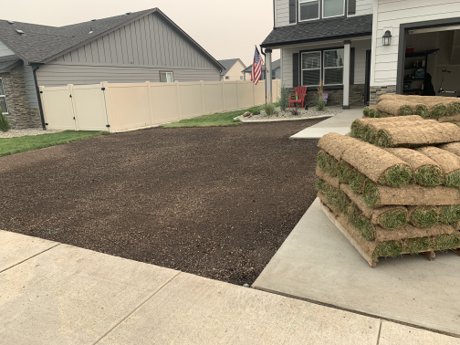
Finally, it was time to lay down the new sod. I took it upon myself to do the job myself. Carefully unrolling each section, I fit them together like puzzle pieces, creating a smooth and beautiful lawn. From that point on, I took care of the new sod with dedication.
I watered it with the schedule I outlined above.
The sod finally took root and began to flourish.
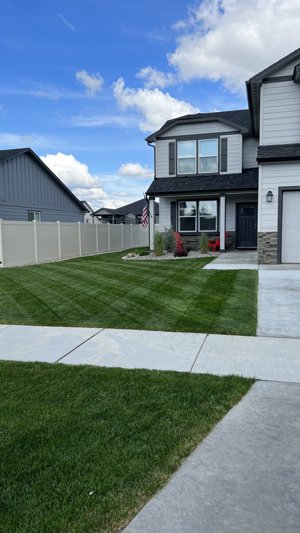
It was finally a success.
It hasn't even been a year and the new grass is thriving.
Rooted solidly.
Growing in thick.
And spreading.
The Big Takeaway
Of course watering new sod is critical to the success of having a healthy lawn.
But without good topsoil, carefully laid sod, all the watering won't matter.
Make sure you have good top soil, healthy fresh-cut sod and that it's carefully laid.
Watering new sod correctly is crucial in ensuring that your lawn looks its best and maintains a healthy growth rate. By following the guidelines outlined above, you'll be able to provide your new sod with the optimal amount of water, enabling it to thrive and grow into a lush, green oasis. So, don't hesitate to invest time in watering your new sod properly - you'll be rewarded with a stunning lawn that's the envy of your neighbors!
Q: What is the best way to water new sod?
The best way to water new sod is to start by providing it with frequent, shallow watering during the first week after installation. Water the new sod several times a day, ensuring that the top one inch of soil remains consistently moist. During the second week, reduce the frequency of your watering sessions to once a day and ensure that soil remains moist to a depth of 1-2 inches. By the third and fourth weeks, your new sod should be firmly rooted and ready for deeper, less frequent watering; water every other day, soaking the soil to a depth of 3-4 inches. After the first month, transition to a standard watering schedule: typically once or twice a week depending on local climate and soil type. Be sure to adjust your practices based on your lawn's appearance and growth patterns as needed.
Q: Should I fertilize my new sod?

Yes, it is recommended to fertilize your new sod. Lawns need nutrients like nitrogen and phosphorus for growth and greening up. Fertilizers help to replenish these essential nutrients, giving the new sod a boost of energy to help it establish stronger roots and become green faster. It is best to wait until the third or fourth week when the roots are more established before applying fertilizer. Be sure to follow the directions on the fertilizer packaging for proper application instructions.
Q: How often, how soon should I mow my new sod?
It is best to wait at least 4 weeks before mowing your new sod for the first time. This allows the sod to establish strong roots and become well-established. After that, you should mow your lawn regularly (at least once a week) depending on how quickly it grows. Be sure to use a sharp blade as this will help the grass stay green and healthy while providing an attractive finish. Maintain a height of two to three inches throughout most of the growing season for best results.
By following these guidelines, you’ll be able to provide your new sod with all the care and attention it needs in order to thrive in its new home! With proper watering, fertilizing, and mowing, your lawn will remain lush and healthy for years to come.
Q: How long does it take for new sod to become established?
On average, it takes about 4-6 weeks for new sod to become established. During this time, it is important to provide the new sod with frequent, shallow watering during the first week and then reduce the frequency of your watering sessions as you enter the second week. By the third and fourth weeks, your new sod should be firmly rooted and ready for deeper, less frequent watering. After the first month, you can transition to a standard watering schedule: typically once or twice a week depending on local climate and soil type. Be sure to adjust your practices based on your lawn's appearance and growth patterns as needed.
Q: What is the best time of day to water my new sod?
The best time of day to water new sod is in the morning, between 6am and 10am. This will allow you to provide your lawn with the right amount of moisture before it becomes hot and dry outside. Watering during this time also helps reduce evaporation as well as disease problems that can arise from overwatering or watering too late in the day. Additionally, watering your new sod in the morning gives it plenty of time to absorb moisture throughout the day, enabling your grass to become firmly established fast.
Q: How do I know if my new sod is taking root?
It's easy to see if your sod is taking root. Gently pull up on one corner of the sod. If the roots are not fully developed, the plant will come out easily when lifted. If the sod is difficult to lift, it means that the root system has developed properly.

Bonus Material: A Free Guide That Helps You Get Sell Ready (18 Home Preparation Tips)
You have been looking for a new home but still, have your home. Many people suggest selling your home first before purchasing a new place. This can be helpful for finances, but it isn’t always the best route.

You can buy a house without selling yours first. You can have multiple houses and multiple mortgages. There may be a few obstacles or requirements before purchasing a new home that will be taken into consideration by either you or the mortgage loan companies.
You don’t even have to sell your home before purchasing the next one. You can use it as passive income, or you can sell it after you have moved into your new home. Here is everything you need to know when buying a new home without selling yours first.
Of course, you can! If you have the means and need to have a home purchased to move into, then you can buy a house before selling your current one. There are no rules that say you can’t buy another house when you already have one.
Buying a house is a big purchase, and this is why you will often see people sell their current house first before purchasing their next house. But there are many considerations to make when you decide to take this route with your real estate.

There are many benefits that come with buying a new house before selling it. This is why some people, especially those with families, like to buy a home and then move to sell their previous home. Here are some of those benefits:
These points are great when you have large pets and a large family. It can be difficult to find places to stay while searching for a new home. This eliminates that issue.
Although there are many benefits to buying before selling a home, there are some downfalls. Buying a home is a big purchase, and if you are not financially secure, it may not be the best decision to go with. Here are some downfalls to take into consideration:
If you haven’t paid off your current home, it could cause financial problems. Your mortgage company may need a plan on how you will pay for this, and you may not be approved for the new loan if you don’t have enough income compared to your debt.
Real estate can be unpredictable at times and is always changing. This can make it difficult to sell your current home, especially if you are trying to sell it fast. Unless you have someone already lined up, you could be sitting on your old home for months before someone buys it.

If you can buy a new home before selling your current one, you need to consider a few things when buying. Here are those considerations:
Sometimes selling your current home can be difficult. If you are having issues selling it and need a way to make income or pay its mortgage, you don’t have to just sit on the home. You can use it as a rental or even post it on websites like Airbnb.
By doing this, not only will you be more financially secure, you can have a passive income that requires little to no work while you still have it on the market.

Using your first home as a rental can be a temporary or a long-term commitment. This all depends on what you need or what your situation is. Most renters will be looking at a six-month or yearly contract.
You may want to start with a shorter-term contract in the beginning if you are new to renting out your home. This will help you decide if renting out your home is really for you and if you want to continue doing it or just sell it entirely.
If you need something more temporary than renting out your home, using it as an Airbnb can be a wonderful option. You can rent out the whole house or even rent out rooms. It is simple to sign up through Airbnb, and you don’t have to worry about long contracts.
If your home is in a prime location, many people will be booking in no time, and you will be earning more money from Airbnb than if you were to sign with a renter. The income could cover the mortgage or more.

There are always downfalls to renting out your home, whether to a renter or Airbnb. Here are some things to think about if you do want to take this route:
Buying a house without selling yours first can be very beneficial and easy on you, but it could also make it harder financially. Either way, this is a big investment, and you should consider all aspects when you decide to buy a second home before selling your first one.
If you want to talk about next moves, schedule a Smart Moves Conversation with us, or start a Smart Moves Chat right now.
Not ready for that?
Get free, instant access to our Get Sell Ready.

BONUS MATERIAL: GET OUR GET-SELL-READY GUIDE. 18 SIMPLE INEXPENSIVE THINGS YOU CAN DO TO GET YOUR HOME READY FOR SALE
Renovating and remodeling a house is often an exciting and fulfilling experience.
There is always something refreshing about transforming a space and making it uniquely yours. However, before embarking on a DIY remodeling project, it is crucial to understand certain remodeling mistakes that could cost you in the long run. In this post, we'll explore 16 common DIY remodeling mistakes and provide practical tips on how to avoid them.

Before embarking on a remodeling project, it's crucial to take time to plan and research. Make sure you create a budget, timeline, and have a clear plan of your vision for the space. It's easy to jump into the project with excitement, but this can lead to disastrous results. Without a solid plan, you'll be tempted to make impromptu decisions that might derail your project.
Details matter in a remodeling project. Not considering accessories such as switch covers, knobs, handles or outlet placement could affect your space's functionality and aesthetic.
A common DIY remodeling mistake is buying low-quality materials to save a few bucks. It may be tempting, but you'll end up spending more in the long run as cheap products won't last.
WARNING! - A big red flag for home buyers is when they see sloppy DIY projects. This is either the job done poorly or just low-quality products and materials. This can hurt the sale of your home. Trying to save a couple of hundred bucks now can cost you tens of thousands later.
DIY remodeling projects can be exciting, but it's essential to be realistic. Taking on multiple projects at once can lead to stress and burnout.
With a DIY remodeling project, it can be easy to become overwhelmed by the workload and timeline. This can lead to stress and frustration with the process. If not managed properly, this stress can consume you and make it difficult to enjoy your home as you're constantly preoccupied with the project.
Remember how long it took to get organized and unpacked when you moved in. Doing a DIY remodeling project can make it feel like that all over again.
You might be stepping over tools and equipment. You might not have a room with furniture, so you can't use or relax in that part of the house. You might not have a kitchen to use, so you're eating out all the time.

Check whether permits are necessary for the work you want to do and adhere to the local building codes.
Safety is crucial when remodeling. Failing to wear protective gear or operating tools incorrectly could have severe consequences. Ensure you follow the manufacturer’s directions to stay safe.
If you hire a contractor, be sure that you have written documentation, and understand what you are getting into.
It's crucial to take accurate measurements as errors can be costly. Measure twice, cut once.
It's common for renovations to cost more than anticipated. Have a realistic budget before starting and try to really stick with it.
It's necessary to identify electrical and plumbing needs before starting a project. Overlooking this detail can be costly and result in a poorly finished project.

The goal of a remodeling project should be to create a coherent space; ignoring specific details can make a space appear disjointed.
This is connected to not making an effort to blend new and old. People are quick to jump on the what's trendy bandwagon. Quickly destroying classic and timeless features.
When remodeling your home, it's essential to consider the classic and timeless features of the space. What’s trendy today won't necessarily be in style tomorrow, so it pays to invest in designs and products that will look good for years to come.
When it comes to furniture, prioritize quality over quantity. Investing in high-quality pieces that have a timeless style can help you achieve a beautiful look that won't look outdated after a few years.
It's also important to remember the value of classic building materials such as wood and stone, which will never go out of style. Rely on natural finishes with textures like natural brick, wood, metal, or stone rather than bright plastic accents for long-lasting appeal.

At the end of the day, a house is meant to be functional. Remodeling a space without considering its practicality defeats the purpose of a renovation.
Rushing to finish a project can result in a poorly done job. Ensure you take the time to do things correctly the first time around.
Major remodels mean major changes. In some cases, it may be better to move and start fresh in a new place. This can save time, money, and energy.
Don't forget about the exterior of your home when remodeling. The curb appeal of your home is just as important as its interior. This could be your yard, trees, garden. Or deck and patio. It could be making it a place for more recreation or just more living space.

By avoiding these common DIY remodeling mistakes, you’ll have a smoother transition as you renovate your home. Remember to assess the space before beginning any project to ensure it is done correctly. With careful planning and attention to detail, you’ll be able to enjoy the fruits of your labor for years to come.
Remodeling and updating for your own preference versus getting the home ready for the market are two different things. If you're thinking about reselling your home, consider prioritizing projects that give you the most return on your investment in order to maximize the value of your property.
The specifics of what will add value and appeal to potential buyers depend on factors such as location and budget.
 Whatever project you choose to do, make sure it’s something that is both practical and aesthetically pleasing. This way, whether you decide to stay or sell, everyone who visits your home will appreciate the improvements you’ve made.
If you're looking to Get Sell Ready, get free, instant access to our Get Sell Ready Guide.
1. Ready to go look at a home? - just hit reply and let us know what you’d like a tour of and when. Or just click the ‘Schedule Showing ‘ on PersingerGroup.com
2. If you’re a first-time homebuyer - get your free guide, 7 Costly Mistakes Home Buyers Make, visit http://costlymistakeshomebuyersmake.com
3. If you’re SELLING your home - get access to our Get Sell Ready guide and checklist. It will show you how to get your home ready for sale without spending a fortune or wasting your nights and weekends updating and remodeling your home. http://getsellready.com
4. Start a Smart Moves Conversation with us… get clarity about what to do next, get your questions answered, your concerns are taken care of, and an action plan customized to your timeline. Schedule a call at http://smartmovescall.com or start a chat at http://m.me/persingergroup

The age-old question: Is now a good time to buy?
Some people swear by trying to time the real estate market, while others say it's impossible.
"We haven't the faintest idea what the stock market is gonna do when it opens on Monday — we never have." - Warren Buffett
What if I told you the only thing that truly matters is finding the right time for you?

You're a homeowner who is desperately trying to time the real estate market.
You've heard all about the financial benefits of buying low when possible and selling high, and you want in on that action. So you're juggling your family's budget, looking at the local housing market trends, and doing your best to make sure you pick just the right moment to buy or sell before prices change.
But it's harder than you thought, especially since predicting the future of any given housing market is never an exact science.
You know that timing is everything when it comes to maximizing profit potential, so you read up on fluctuations in home values and do your best to stay ahead of the game.
Just when you think you have it figured out - BOOM! The market shifts again (maybe because of an inflation report, a bank failure, an interest rates increase, a jobs report, a war starting) and suddenly what seemed like a great deal only a few days ago isn't making much sense anymore.
Strap in, folks - we're about to dive into the magical world of time the real estate market, it's going to be a wild ride!

First things first - what does it mean to "time the market"? In a nutshell, it's all about trying to predict the best moment to buy or sell based on economic trends and indicators.
Spoiler alert: This is about as easy as teaching a cat to do your taxes. The truth is, even the most seasoned real estate gurus can't nail this down to a science. So if they can't do it, what hope do the rest of us have?
“Timing the market is a fools game, whereas time in the market is your greatest natural advantage.” - Nick Murray
 Here's the thing: Instead of stressing over trying to time the market, focus on finding the right time for you.
"When the time comes to buy you won't want to." - Walter Deemer
This is when the stars align, and everything in your life just screams, "Buy that house!" or "Sell, sell, sell!"
But how do you know when this magical moment has arrived?
We've shared before that you Get Ready to Buy a Home In These 3 Areas.
Well, here are a few other things to consider:

Finding the perfect time to buy or sell a home is a deeply personal decision. There's no one-size-fits-all answer.

Instead of obsessing over timing the market, focus on finding the right time for you.
Embrace the journey, learn from your experiences, and remember - there's nothing quite like the feeling of unlocking the door to your first home or your next home for the first time.

Bonus Material: A Free Guide That Helps You Get Sell Ready (18 Home Preparation Tips)
Then the Federal Reserve raised interest rates. Things slowed down.
In 2021, the median sales price was 17%.
The median home sale price in 2022 was $386,300, up 10.2% from 2021 and the highest on record.
Meanwhile with 5.03 million homes sold, down 17.8% from the year before, making it the lowest amount since 2014.
If you're planning on selling your home this year, there are a few things you need to do to make sure you get the most money. Or even to make sure your home sells.

This article will cover two main things:
Selling your home in 2023 might feel like a daunting task, with the real estate market shifting. Buyers are more selective. But making sure you get the most money for your home doesn’t have to be difficult. You can make sure your house sells quickly, for top dollar by avoiding common mistakes and following some key steps.
 Many sellers are stuck in the past. They remember seeing a price for their home at the peak of the real estate market. And they want to price their homes as if it were still a hot market.
It's important to be realistic with your price. Understand that buyers may not offer as much as they did two years ago. Or even two months ago.
What Price Is Not
The market value of your home is determined by the market - that is, what today's buyers are willing to pay.
Buyers are comparing your home to other homes that are on the market at this exact time. Those homes are your competition. Buyers are also looking at what is under contract and sold.
Buyers don't care about:
The reason none of these things matter, your neighbor, the other real estate agent, Zillow, and the tax assessor are not buying your house.
In fact, Zillow was buying homes for a while. But they did such a bad job at predicting home prices they shut down that side of their business.
“We’ve determined the unpredictability in forecasting home prices far exceeds what we anticipated and continuing to scale Zillow Offers would result in too much earnings and balance-sheet volatility,” said Rich Barton, Zillow’s co-founder and CEO
Zillow admits they're not good at predicting and forecasting home prices.
 Before you start to worry about your home's closing day, the curb appeal, home staging or what home improvement projects to focus on, you'll want to get in what we call, the HOME IS SOLD MINDSET.
Here is a cold hard reality: It’s not your home anymore.
Not at the time your home sells, closes and you get your check.
Right now. Starting right now, this is no longer your home.
It’s a product in the marketplace. Competing with other products in the marketplace (comparable homes). Trying to attract buyers so you can get the best price.
You can continue to feel an emotional attachment to your house; remembering when you brought your kids home from the hospital for the first. Celebrating the holidays. Or any other countless memories you've created there. But you do that at the possibility of minimizing the money you’ll get.
It could jeopardize your entire sale.
Some homes don't sell.
The reality is at some point, you’ll be packing up the moving boxes, saying goodbye to this house. Looking at the sold sign in your car mirrors. Leaving your keys behind, and never coming back to it again.
The sooner you get into this Sold Mindset, the better chance you have of doing the things you need to do to get the most dollars in the sale.
I had one seller call me, after her house had failed to sell with another real estate agent. She wanted me to come “rescue” her and her home sale.
After I did a Marketing and Pricing Diagnostic for her, she confessed that when she had listed with her previous agent when she was not yet ready to sell. She didn’t want to let her house go.
For this seller, her emotional attachment had cost her a year of extra payments on her home. It sat vacant. Developed a stigma in the marketplace that there was “something wrong” with the home because it had been for sale for so long. This impacted the overall home value.
________
Everyone probably knows 3 or 4, or more real estate agents today. In seller's markets it is very common for more people to become real estate agents. Now that the market is shifting many agents don't know what to do to help their clients. Or themselves.
But do you know what that agent will do for you when selling your home?
Besides, put a sign in the yard and list it on the MLS...
 If you want to know how to sell your home for more money, don't settle. Sure it will sell in these seller real estate markets, but could you have got more money?
In a shifting real estate market, days on market are increasing and inventory is stacking up. Prices are stabilizing or falling. It is now crucial to do these three things to get the most money for your home.
In this section you'll read about:
After you get the right mindset. Decide the market price of your house, not what you wished it was. These are the three things you must do when selling your home to get the highest sale price.
The most important things a seller should do to get your home ready for sale:
This is simple and does a lot to help first impressions and the home's appeal.
Organize things so there is more space in the house.
Do a deep cleaning so the house makes a great first impression.
Then Declutter. Get rid of things you don't need, no longer use and don't plan on moving. Then pack up the things that you don't need for day-to-day living.
A decluttered house will help the home feel more spacious. Also makes it easier to keep clean before showings.

Updates aren’t always necessary. Your focus should be on repairs and maintenance. A new quartz countertop might look nice, but a leaky roof will kill the sale. During the home inspection, if a potential buyer finds a list of items wrong with the house, the deal falls apart. This impacts you getting the best price.
These are the toughest decisions to make.
If you're trying to get a higher price and increase the perceived value, you might think upgrading or remodeling your house is the best way. And you might be able to increase your list price. But that doesn't mean you'll be walking away with more money.
For example, according to the Remodeling Cost vs Value Report a major kitchen remodel only returns 57% of the cost.
That means if you spend $20,000, you'll only get $11,400 back out of it. Sure, higher sales price, but less money overall in your pocket.
You don't want to waste time and money doing things to get your home ready for sale that won't help it sell for more money. That would be silly.
You don’t have to spend a fortune and all your weekends updating and remodeling your house to get it sell-ready.
Now that your home looks great, it's time to get it seen.
First impressions matter. But the first impression of your home doesn't happen when the potential buyer walks in the door. It happens online.
Good real estate photography is key to getting your home seen by as many people as possible. It's important to have good-quality photos that show your home in the best light. You want to make sure potential buyers can see all the features and amenities of your home. If the photos are blurry, dark or just not appealing, potential buyers will move on to the next house.
 According to a study by the National Association of Realtors, listing videos result in higher conversion rates than listings without videos. This makes sense when you think about it.
People are visual creatures.
We like to see what we’re buying before we buy it. Having a video of your home allows potential buyers to do just that.
It also allows them to get a feel for the space and how it could fit their needs. It’s also a great way to show off your home’s features and amenities. Potential buyers can get a better sense of the layout and whether or not it’s a good fit for them.
Good real estate video marketing is like having a 24/7 open house. But without all the weirdness of strangers freely walking through your home.
- Properties with a professional video tour are perceived as being worth 6% MORE than similar homes without.
- 86% of buyers watch videos to find out more about a community
- 70% of buyers watch videos to tour the inside of a home
- Video generates 1,200% more shares than text and images combined
- Real estate listings with videos receive 403% more inquiries than those without video. (In other words, real estate ads with videos generate quadruple the interest of those without videos.)
- 85% of buyers and sellers want to work with an agent who uses video as part of their marketing efforts
- 51% of home shoppers rated YouTube as their top video research site. Brokerage websites with 41% and video from the organic Google results with 37% were the next most popular options.
SOURCE: DigitalSherpa, eMarketer, NAR, YouTube, Google, Forrester Research
At Persinger Group we like to invest money into the marketing of our listings.
A sign in the yard will let people in the neighborhood know the home is for sale.
The MLS and real estate websites will let active buyers who are in the market RIGHT NOW know the home is for sale.
But if you really want to know how to sell your home for more money... it comes down to simple supply and demand economics.
Would you rather have fewer buyers or more buyers interested in your house?
Paid marketing and advertising helps create more awareness and potentially generates the most buyers. And doing paid advertising on Facebook, Instagram and YouTube with a great real estate video allows us to reach the most buyers. Real Estate Agents, Video and Paid Ads
We've noticed some real estate agents will invest in a real estate video on higher-end, luxury-type properties. But rarely will they invest in paid advertising.
Just look on YouTube. You can probably search any (city name + real estate) and see a bunch of great listing videos that only have 10, 20 or 30 views.
So you have a great listing, at the right price, looks awesome in the video but it's not getting viewed... how does that help sell your home for the most money?
It doesn't.
In a shifting real estate market, it's more important than ever to have a great real estate video that's marketed well. At Persinger Group, we've seen great success with this strategy and know how to get your home seen by the most buyers.
We even offer a 10,000 Views Guarantee.
 Once you start getting offers the real work begins.
In a shifting real estate market, you're probably not going to get 12 offers $60K over list price.
It's important to have an experienced real estate agent who knows how to negotiate and navigate the offer process. You don't want to scare off buyers in a shifting market.
Then there are all the important timelines and deadlines in a real estate transaction. If these dates aren't met, the deal has a greater chance of falling apart.
We're your local real estate agents in the North Idaho real estate market and Western Washington helping you do those three things.
You can spend a lot of time online looking for tips, but until you start talking to a local real estate agent, who understands the local market, trends and want buyers preferences are you're not going to be any closer to selling your house.
WHAT YOU CAN DO NEXT: