



What Are Winters Like in Coeur d'Alene, Idaho?
(An Honest, Local's Guide)
BONUS MATERIAL: DOWNLOAD 7 COSTLY MISTAKES HOME BUYERS MAKE GUIDE
If you're thinking about moving to Coeur d'Alene — or you're just trying to figure out whether North Idaho winters are as brutal as they sound — you landed in the right place.
I live here. I sell real estate in North Idaho. And I want to give you the honest, on-the-ground truth about what winters in Coeur d'Alene are actually like, not just the stats, but the real feel of it.
Here's the short answer: winters in Coeur d'Alene are real — but they're far milder than most people expect. There's snow, there are cold days, and the sun goes to bed early. But it's nothing like Minnesota. It's nothing like Montana. And honestly? It's not even as bad as many parts of Colorado.
Let me walk you through everything.
The Big Question: How Bad Is Winter in Coeur d'Alene?
I'll give you my personal answer first.
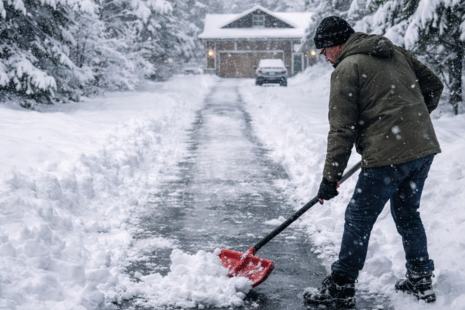 This past winter, I shoveled my driveway once. Just once. And the year before that? A handful of times — less than five.
That's the honest truth from someone who lives here. If you're imagining yourself buried under several feet of snow every week from November through March, that's just not the reality of daily life in CDA.
Now, does it snow? Yes. Does it get cold? Absolutely. But the image of North Idaho as some frozen, snowbound tundra is one of the biggest misconceptions people bring when they're considering a move here.
Coeur d'Alene Winter Temperatures: What to Actually Expect
Temperatures in Coeur d'Alene during winter are cold but not extreme. Here's what the numbers look like:
- December: Average highs around 34–38°F, lows dipping into the mid-20s
- January: The coldest month, with average lows around 24–25°F. Highs usually hover in the mid-30s.
- February: Slightly warmer than January, with temperatures beginning a gradual climb
- March: Highs reaching the low-to-mid 40s; winter starts loosening its grip
For reference, January in Bozeman, Montana sees average lows of 13°F. Denver hits around 18°F. Even Boise drops to nearly the same low as Coeur d'Alene. We're not an outlier — we're actually right in line with or milder than many popular Western cities people happily move to.
Sustained temps that cold are rare. Most winter days feel cold and brisk, not dangerously frigid.
How Much Snow Does Coeur d'Alene Get?
This is probably the question I hear most from people considering a move here.
Coeur d'Alene averages about 42 inches of snow per year. The U.S. national average is 28 inches, so yes, we're above average — but that number often shocks people in a different direction than they expected. They assumed it would be higher.
To put it in perspective:
| City | Annual Snowfall |
| Boulder, CO | 89 inches |
| Bozeman, MT | 63 inches |
| Spokane, WA | 44 inches |
| Coeur d'Alene, ID | 42 inches |
| Boise, ID | 18 inches |
| Bend, OR | 20.5 inches |
| U.S. National Average | 28 inches |
And here's where I can speak from personal experience: I grew up in a small town called Reedsburg, Wisconsin. Reedsburg is a small city in south-central Wisconsin — real Midwest winters. Ice fishing by December type of cold. January lows that regularly hit single digits, wind chills that pushed temps to -20°F or colder, and snowfall that just kept coming from Halloween to Easter. Reedsburg averages around 40–50 inches of snow per year depending on the season, but the difference isn't just the inches — it's the cold. When it's 8°F with a 20 mph northwest wind cutting across open farmland, the snow doesn't melt. It packs down, ices over, and stays. Shoveling wasn't occasional growing up — it was a regular part of winter life, sometimes multiple times a week.

Moving to Coeur d'Alene genuinely surprised me. The snow here is real, but it’s differently. It falls, it's beautiful, and then a mild stretch rolls in off the lake and it's largely gone. The cold snaps don't have that same bone-deep Wisconsin bite. If you're coming from the Midwest — Wisconsin, Minnesota, Illinois — I think you'll actually exhale when you experience your first CDA winter.
We get more snow than the national average, but significantly less than mountain towns and northern Midwest cities. And here's the important nuance: most of it doesn't stick around long. Lake Coeur d'Alene has a moderating effect on local temperatures, meaning snow that falls in the city often melts faster than you'd expect. One of the surprising things to me was Lake Coeur d’Alene doesn’t freeze. Again, coming from Wisconsin, I was use to people driving their trucks on the ice out to their ice fishing shanty and snowmobiling on the lake. That’s not going to happen on Lake Coeur d’ALene.
Snowfall generally begins in November and can linger into April, but the heaviest months are December through February. January is the peak, averaging around 16 inches for the month.
For a deep dive into the snowfall data specifically, check out How Much Snow Does Coeur d'Alene Get? — we break the numbers down in detail there.
What's the Cloud Cover and Daylight Like?
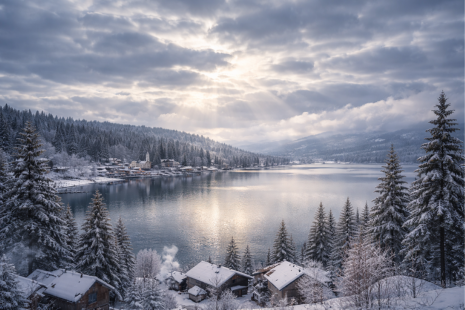 Okay, here's the part that doesn't get talked about enough: winter in Coeur d'Alene is gray. I’m not going to sugarcoat that.
The city sits at roughly the same latitude as Seattle, which means:
- The shortest day (around December 21) gives you only about 8 hours and 25 minutes of daylight
- Cloud cover runs around 74% during peak winter months
- Humidity spikes to around 93% in January, making cold air feel more cutting
If you're coming from somewhere sunny like Arizona, Southern California, or Texas, the gray skies can be an adjustment. Many newcomers say this is actually harder to get used to than the snow itself. Seasonal Affective Disorder (SAD) is something that could be very real for you.
The good news? The sun does shine in winter — and on those bluebird days, the snow-covered mountains, the wintery lake, and the crisp air create some of the most beautiful scenery you've ever seen. Those days make it all worth it for most people who call CDA home.
Does Coeur d'Alene Handle Snow Well? (Roads, Plowing, Driving)
One of the legitimate concerns for people moving from low-snowfall areas is: can I actually drive in this?
Yes. And here's why: the city is built for it.
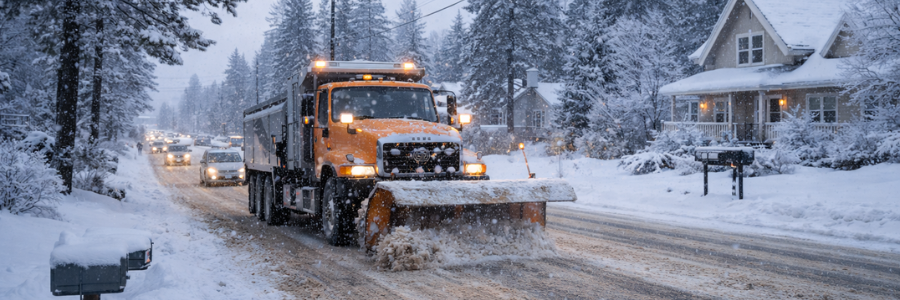
Coeur d'Alene's public works department operates on a clear priority system for snow removal. Plowing typically kicks in once 4–5 inches accumulate (or 2 inches with more forecast). The citywide goal is to complete a full plowing operation within 40 hours of a major storm.
Priority order for plowing:
- Emergency routes
- Major thoroughfares and dangerous hills
- Arterials
- Bus routes
- Residential streets
- Cul-de-sacs
If you live on a main street, you'll usually see pavement fast. Residential streets take longer, but the city does get to them. Salt, sand, and plows are the norm here — this isn't like Seattle, where a couple of inches shuts everything down.
A few practical tips for driving in CDA winters:
- All-season or winter tires are highly recommended if you're on hills or in an area with more elevation
- Give yourself extra time in the morning after overnight snow
- Keep an emergency kit in your car (blanket, jumper cables, ice scraper)
- The city website and local Facebook groups are good real-time resources for road conditions
What About the Mountains? (Skiing, Snowfall Up There)
Here's where it gets interesting. Coeur d'Alene's in-town snowfall is mild, but the surrounding mountains are a completely different story.
The Coeur d'Alene Mountains, part of the Bitterroot Range just outside of town, can see an average of 382 inches of snow per year. That's over 30 feet. This is what makes the greater North Idaho area a genuine winter recreation destination.
Within driving distance from Coeur d'Alene:
- Schweitzer Mountain Resort (Sandpoint) — Nearly 3,000 acres of skiable terrain, one of the largest resorts in the Pacific Northwest
- Silver Mountain Resort (Kellogg) — About 45 minutes away, family-friendly with great snowfall
- 49 Degrees North (Chewelah, WA) — About an hour's drive with a very local, uncrowded feel
- Lookout Pass Ski & Recreation Area — On the Montana border, known for deep powder
- Mount Spokane Ski & Snowboard Park — About 45 minutes via Spokane
So the paradox of living in CDA is a good one: you get the milder winters in town while still having world-class ski mountains within an hour's drive. You can read more about how far is Coeur d’Alene from skiing.
What Do Locals Actually Do All Winter? (Stay inside?)
One of the questions I hear constantly from people moving here is: "What do people do in the winter?"
A lot, actually.
 Outdoor Activities:
- Skiing and snowboarding at the nearby resorts
- Snowshoeing in the surrounding forests
- Cross-country skiing on groomed trails
- Sledding at Cherry Hill (30-acre park at Hazel Ave. and 15th St.)
- Fat tire biking
In-Town Winter Events:
- CDA on Ice — An outdoor skating rink in McEuen Park running from late October through January
- North Pole Cruise — A unique holiday experience on Lake Coeur d'Alene, beloved by families
- The downtown area stays active through winter with local restaurants, breweries, coffee shops, and galleries
The Real Secret: People here don't hibernate through winter — they embrace it. Once you get the right gear and the right mindset, winter becomes one of the more special seasons in North Idaho.
Month-by-Month Winter Breakdown for Coeur d'Alene
November
The transition month. Temperatures drop noticeably, nights get long, and the first snowfalls usually arrive. Expect highs in the upper 30s to low 40s and the first real frosts. Some years see measurable snow; other years it stays mostly in the mountains.
December
Winter fully arrives. Average snowfall around 12–13 inches for the month. Temps drop into the mid-20s at night. Downtown CDA is festive and charming — holiday lights reflect off the lake on dark evenings.
January
The cold peak. Historically the snowiest month at around 16 inches. Average lows hit 24–25°F. Expect gray skies, some fog, and the occasional snow event. This is the month where good winter habits matter most.
February
The beginning of hope. Temperatures are marginally warmer than January, snowfall begins to taper, and the days get noticeably longer. Sunny stretches feel genuinely encouraging.
March
Winter loosens its grip. Highs climb into the 40s and sometimes low 50s. Snow is possible but brief. By late March, you can feel spring approaching. Mud season begins.
Common Misconceptions About Coeur d'Alene Winters
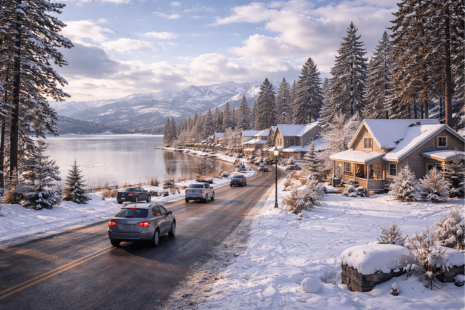 "It's basically Montana up there." Not really. Montana winters are significantly more extreme. Bozeman and Missoula see much colder temperatures and more consistent snowpack than CDA.
"You'll be snowed in all the time." That's just not the reality. Most snowfall events are manageable, the city plows regularly, and you'll rarely be stuck at home for weather reasons alone.
"The lake freezes over completely." Lake Coeur d'Alene, being a large and relatively deep body of water, rarely freezes completely. Portions of shallower bays and inlets may freeze, but the main lake acts as a thermal moderator for the surrounding area — which is part of why temperatures in CDA proper stay milder.
"You need a 4WD truck." Many locals drive standard cars just fine through winter. AWD or good winter tires are helpful, especially if you live on a hill or drive into the mountains. But you don't need a lifted truck to function in CDA.
If CDA home prices are a concern, nearby Post Falls offers a similar lifestyle at a lower price point — towns near Coeur d’alene. Post Falls has mild winters too and this expands your funnel.
Who Loves Winters in Coeur d'Alene (and Who Struggles)
You'll probably love CDA winters if:
- You appreciate four real seasons
- You enjoy skiing, snowshoeing, or winter recreation
- You find the cozy, slow pace of winter restorative
- You're coming from a harsher winter climate (Midwest, Northeast, Mountain West)
You might struggle with CDA winters if:
- You need 300 days of sunshine per year
- Gray skies significantly affect your mood or mental health
- You've never driven in snow and have no interest in learning
- You're coming from a perpetually warm climate and expect summer weather to continue
Should You Move to Coeur d'Alene? The Winter Honest Answer
Look — I sell real estate here. But more than that, I live here year-round. And I'll tell you the truth: winters in Coeur d'Alene are one of the better-kept secrets about living in the Northwest.
It's real winter. It's not a token cold season. But it's also extremely manageable, genuinely beautiful, and shorter than you'd expect. The area around CDA gets epic mountain snow that supports incredible recreation, while the city itself stays mild enough that daily life doesn't grind to a halt.
I shoveled once this past winter. The year before, maybe a handful of times. That's my lived experience — and it's backed up by the data.
If you're weighing a move to Coeur d'Alene and winter has been a sticking point, I'd encourage you to come visit in January or February. See it for yourself. Walk downtown. Find the right neighborhood in Coeur D’alene you think you’d live in. Drive up to Schweitzer or out to Silver Mountain. Sit by the lake. You might be surprised by what you find.
Frequently Asked Questions About Coeur d'Alene Winters
Does Coeur d'Alene get a lot of snow? Coeur d'Alene averages 42 inches of snow per year — above the national average of 28 inches, but far less than major mountain cities like Boulder (89 inches) or Bozeman (63 inches).
How cold does Coeur d'Alene get in the winter? January is the coldest month, with average lows around 24–25°F. It rarely drops below 9°F. Most winter days are in the mid-30s during the day.
When does it start snowing in Coeur d'Alene? Snow can begin as early as October, though significant accumulation typically starts in December. The snowiest months are December through February.
Does it snow a lot in downtown Coeur d'Alene? Less than many expect. Lake Coeur d'Alene moderates temperatures, and most snowfall events are short-lived. The mountains surrounding the city get dramatically more snow than the city itself.
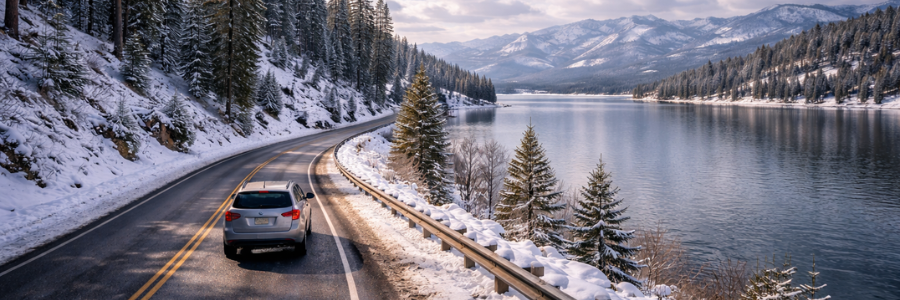
Is it hard to drive in Coeur d'Alene in winter? The city is well-prepared with plows and sand. All-season or winter tires are recommended. Most locals navigate winter roads without major issues.
What's there to do in Coeur d'Alene in winter? Skiing, snowshoeing, ice skating at CDA on Ice, the North Pole Cruise, sledding at Cherry Hill, and enjoying the cozy restaurant and brewery scene downtown.
Thinking about making a move to Coeur d'Alene? The Persinger Group specializes in North Idaho real estate and can help you find the right home — whether you're relocating from across the country or just across the state. Reach out anytime.
For detailed snowfall data and year-by-year comparisons, read our full breakdown: How Much Snow Does Coeur d'Alene Get?
Want the full 7 Costly Mistakes Home buyers Make Guide?
Drop your email below and we’ll send you guide instantly.
And when you’re ready, here are 4 ways we can help you right now…
- Read this article – Real Estate in an Uncertain Economy: What Buyers and Sellers Can Actually Control
- If you’re a first-time homebuyer – get your free guide, 7 Costly Mistakes Home Buyers Make, visit http://costlymistakeshomebuyersmake.com
- If you’re SELLING your home – get access to our Get Sell Ready guide and checklist. It will show you how to get your home ready for sale without spending a fortune or wasting your nights and weekends updating and remodeling your home. http://getsellready.com
- Start a Smart Moves Conversation with us… get clarity about what to do next, get your questions answered, your concerns taken care of, and an action plan customized to your timeline. Schedule a call at http://smartmovescall.com or start a chat at http://m.me/persingergroup
:format(webp):quality(80)/u.realgeeks.media/katherinecannon/Check_your_home_value.png)
:format(webp):quality(80)/u.realgeeks.media/katherinecannon/Have_a_real_estate_conversation.png)